



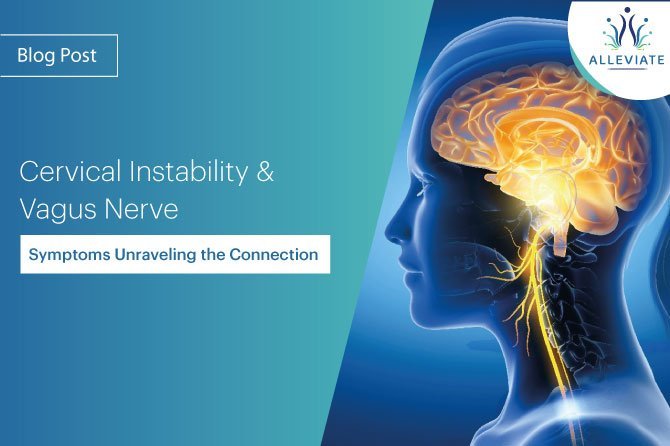

Cervical instability refers to the movement of the neck beyond what is expected, which shakes the nerve traveling around it, including the Vagus Nerve. The vagus nerve is involved with the heart rate, digestion, breathing, and stress. Because the vagus nerve regulates vital autonomic functions, its involvement can explain symptoms that appear unrelated to the neck. An understanding of the connection between instability and the vagus nerve enables physicians to focus on non-surgical intervention to regain neck stability and guard against nerve damage.
Understanding Cervical Instability
The cervical spine may lose its structural integrity. This loss may be caused by whiplash, repetitive strain, degenerative disc disease, inflammation, or connective-tissue disorders. In case of excessive movement of the spine, normal biomechanics is altered, inflammation increases, and neighboring nerves become tense. With time, an instability leads to persistent pain, nerve irritation, and autonomic impairment, which increase with poor posture, prolonged sitting, or head movement.
The Vagus Nerve: An Overview
The vagus nerve originates at the base of the brain, down the neck, under the carotid sheath, and next to the great vessels. It is the major parasympathetic nerve. Its work involves control of heart rate, digestion, breathing, immune responses, and stress. The position of the nerve is susceptible to the proximity of the upper cervical spine, and thus, when it is misaligned or unstable. It is responsible for:
1. Heart Rate Regulation : The vagus nerve helps maintain a healthy heart rate by slowing it down when necessary.
2. Digestive Function : It plays a crucial role in digestion, stimulating stomach acid production and promoting gastrointestinal motility.
3. Immune Response : The vagus nerve is involved in modulating the body’s immune response to infections and inflammation.
4. Inflammation Control : It helps regulate the body’s inflammatory responses, potentially impacting various chronic conditions.
The Connection: Cervical Instability and Vagus Nerve Symptoms
Faulty movement in the neck may provoke the vagus nerve either directly or indirectly through tissues, joints, and inflammation. This annoyance interferes with autonomic signalling and results in symptoms of dizziness, palpitations, stomach pains, tightness of the throat, and fatigue. They frequently vary with the position of the neck, the movement of the head, or prolonged poor posture, indicating that the cervical spine can be the hidden cause of the rest of the possible systemic problems.
Dysautonomia : Dysautonomia is a condition where the autonomic nervous system, which is partially regulated by the vagus nerve, malfunctions. Symptoms can include rapid heart rate, blood pressure fluctuations, and digestive issues.
Chronic Fatigue : Compression or irritation of the vagus nerve can lead to chronic fatigue, a debilitating condition characterized by extreme tiredness.
Digestive Problems : Gastroparesis, characterized by delayed stomach emptying, and irritable bowel syndrome (IBS) are potential digestive issues linked to vagus nerve dysfunction.
Inflammatory Conditions : Dysregulation of the vagus nerve can exacerbate inflammation in the body, potentially contributing to various inflammatory conditions.
Neurological Symptoms : These may include headaches, dizziness, and difficulty concentrating.
Symptoms & Causes
Symptoms of the neck involving vagus-nerve are multisystemic. They can consist of being lightheaded, having an irregular heartbeat, stomach uneasiness, nausea, anxiety-inducing feelings, brain fog, and sleep difficulties. Ligament laxity, recurrent strain in the neck, bad posture, or previous injuries often provoke or aggravate these symptoms. Since they intersect with heart, digestive, or psychological disorders, cervical instability is often not identified unless deliberately sought.
Cervical Instability : Treatment Options
This is aimed at regaining neck stability and nerve irritation. These conservative approaches are specific physiotherapy, posture correction, and neuromuscular retraining. High-technology non-surgical treatments include regenerative injections, image-guided therapy, and pain therapy that assist in the recovery of the ligaments. Through management of the mechanical instability as well as the nerve irritation, the care is expected to normalize the autonomic messages with the aim of reducing the systemic symptoms without operation.
- Prolotherapy : Prolotherapy has shown great promise in stabilizing the cervical spine and alleviating symptoms related to vagus nerve dysfunction caused by cervical instability.
- Physical Therapy : Targeted exercises and therapies can help strengthen neck muscles, improve posture, and potentially reduce cervical instability.
- Surgery : In severe cases where conservative treatments fail, surgical intervention to address cervical instability may be considered.
Conclusion
Instability of the cervix may have a lot more consequences than on the neck, particularly with the vagus nerve. Understanding the role of spinal mechanics in the process of autonomic control enables accurate diagnosis and effective planning of care. Evidence-based, non-surgical management of instability is a meaningful, effective form of relief that enhances the quality of life of patients with complex vagus-nerve symptoms.